

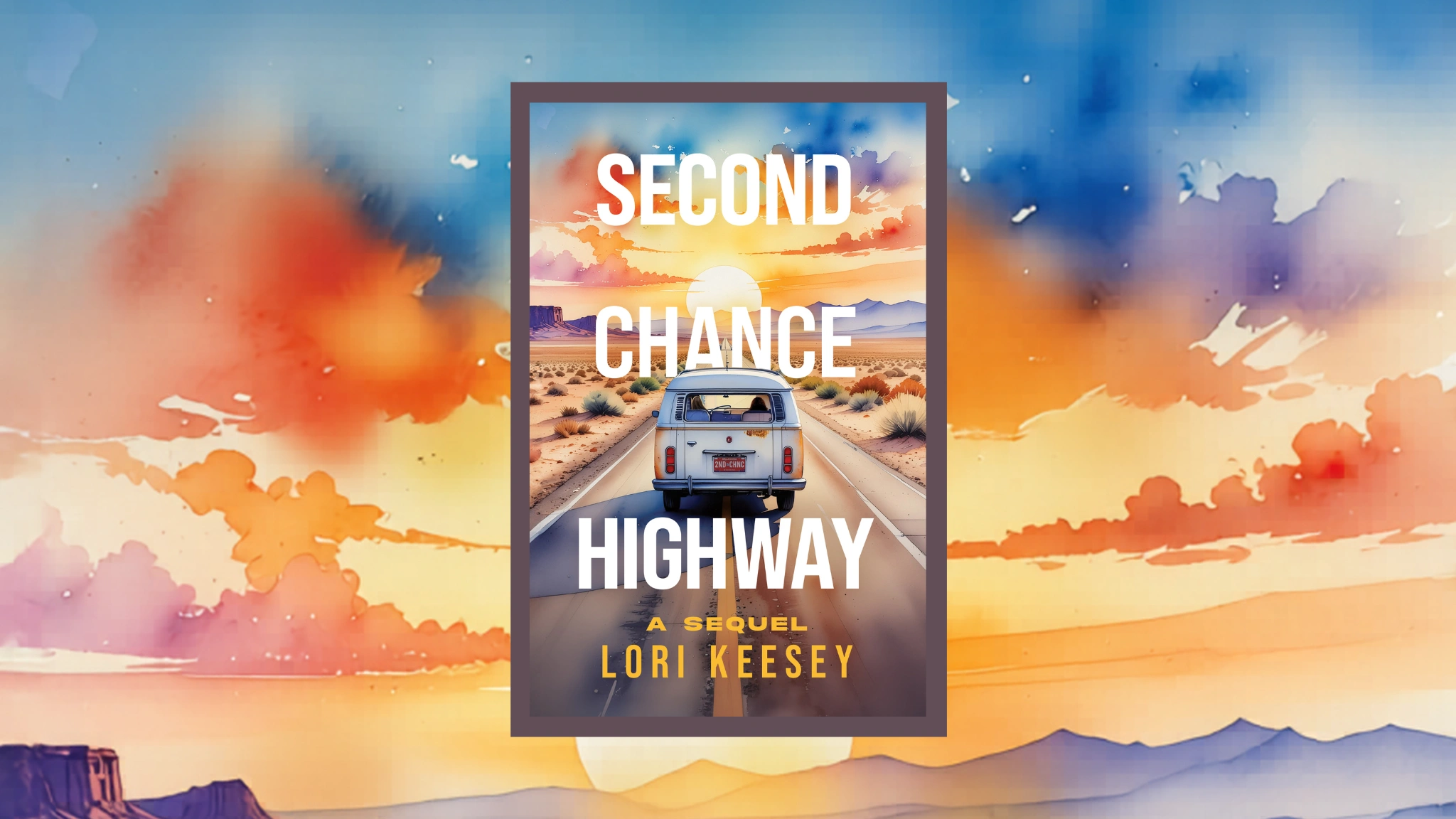
Second Chance Highway by Lori Keesey
A heartfelt, faith-filled novel about outrunning danger, facing old wounds and discovering that grace often travels in the passenger seat.
In Lori Keesey’s Second Chance Highway, escape is only the first act of courage. Ginny Carmichael has already done the urgent thing: she has fled Atlanta with her infant daughter, Laurel, leaving behind Jacob Hudson, the charming, controlling fiancé whose abuse has made her life smaller and smaller. But getting away does not mean she is free. Not yet. Sitting in an Oklahoma diner, shaken by the discovery that Jacob may still be tracking her, Ginny begins to realize that survival will require more than distance. It will require the willingness to face the wounds that sent her into Jacob’s orbit in the first place.
A sequel to Always Think of Me, the novel follows Ginny as she heads west toward Las Vegas in search of Audrey, the mother who abandoned her decades earlier. With Laurel in the back seat and Jacob’s reach still frighteningly long, Ginny’s trip becomes part escape, part reckoning and part act of faith.
Grace on the Mother Road
Keesey gives the novel the shape of a road story, with Route 66 landmarks, motels, churches, diners and roadside stops carrying Ginny farther from Atlanta and closer to the unfinished business of her past. But the most important stops are not tourist attractions. They are the places where Ginny learns who she can trust.
At an Oklahoma diner, Oralyn, a blunt, bighearted waitress with bad legs, a sharp tongue and a gift for seeing trouble, notices Ginny’s distress and steps in. Monty, the diner’s gruff owner, soon joins the effort, discovering the GPS tracker hidden in Ginny’s car and helping devise a plan to throw Jacob off course. These scenes give the book some of its best energy. Keesey is good at showing how practical kindness can become a form of rescue: a meal, a burner phone, a borrowed van, a safe bed for the night.
Oralyn, especially, gives the novel warmth and humor. Newly retired and carrying losses of her own, she is not a polished guide or saintly helper. She is nosy, funny, stubborn, hungry for adventure and more vulnerable than she first appears. Her decision to join Ginny on the road turns the book into a story of found family. Ginny is learning how to accept help without giving up control; Oralyn is learning that her own life may still hold surprises.
Ginny’s Aunt Adele joins the journey after realizing Jacob has manipulated her and lied about his relationship with Ginny. Her role is partly practical — she provides money, transportation and logistical support — but also emotional, as the trip forces her to confront her own distance from the family she spent years avoiding.
The Damage We Inherit
Keesey’s prose is accessible, emotionally direct and openly faith-forward. Her characters reveal what they fear, what they regret and what they believe God is asking of them. That plainspoken sincerity is central to the book’s appeal.
The alternating points of view deepen the reading experience. Ginny’s chapters are anxious and interior, full of bodily signs of trauma: nausea, shaking hands, racing thoughts, the constant fear of being found. Oralyn’s chapters bring colloquial humor and a welcome earthiness. Jacob’s sections are chilling because he exposes himself without realizing it; his entitlement, contempt and obsession with appearances make him most frightening when he thinks he sounds reasonable. Adele and Audrey, meanwhile, widen the story into a multi-generational examination of shame, abandonment, addiction and the emotional costs of looking away.
The title promises second chances, but these are of the hard-won variety. Ginny’s search for Audrey is not a sentimental reunion fantasy. Audrey’s alcoholism and long absence have caused real damage. Adele’s pride and judgment have caused damage, too. Oralyn has her own regrets, and Ginny must decide what forgiveness can repair and what it cannot erase. Again and again, the novel returns to the question of inheritance: people are shaped by the pain handed down to them, but they are not powerless to decide what gets passed on.
Faith and Forgiveness
That is where the book’s spiritual framework matters most. Faith in Second Chance Highway arrives through dreams, warnings, Scripture, prayer, providential meetings and the courage to act upon what God calls us to do. A friend’s posthumous intervention, Oralyn’s sudden appearance in Ginny’s life, Monty’s practical protection and Adele’s late awakening all belong to the same moral universe: one in which grace may be mysterious, but it is also concrete.
By the end, Second Chance Highway has become more than a story about a woman escaping an abusive man. It is a road novel, a recovery story and a tribute to the unlikely people who inspire us to be brave at the very moment we feel most alone. With deep feeling for broken families, chosen kin and the long, uneven work of beginning again, Keesey reminds us that healing rarely happens in isolation.
Second Chance Highway is a heartfelt, faith-filled novel about outrunning danger, facing old wounds and discovering that grace often travels in the passenger seat.
About Lori Keesey
 Lori Keesey is the author of Second Chance Highway, the sequel to the award-winning Always Think of Me. Lori discovered her love for writing at a very young age and then pursued a professional writing career as a journalist, freelance writer, and communication consultant. She graduated from the University of Maryland, College Park.

Publish Date: June 9, 2026
Genre: Fiction
Author: Lori Keesey
Page Count: 386 pages
Publisher: Clay Bridges Press
ISBN: 9781684881604